Saturday, December 2, 2023

Zimbabwe's 2024 Budget: A Harsh Blow to Citizens


Finance Minister: Professor Mthuli Ncube


By Prince Gora

The recent announcement of Zimbabwe's Z$59.5 trillion 2024 budget has triggered strong criticism and dismay across the nation, with Finance Minister Mthuli Ncube at the center of the storm. Ncube unveiled a budget seemingly poised to increase government revenue through a series of tax hikes and fee escalations, drawing intense scrutiny and denunciation from various quarters.

Ncube's budget features a spectrum of price hikes and tax increments across several facets of everyday life:

- Toll gate fees surged by 150 percent, while passport costs nearly doubled, drawing fierce rebuke from the opposition, labeling the budget as "anti-people."

- The Finance Minister justified these measures, citing the need to consolidate stability and preserve disposable incomes within a framework aiming to maintain a sustainable budget deficit.

The budget, allocated with Z$51.2 trillion for tax revenues and Z$2.7 trillion for non-tax revenues, stands against a backdrop of rising government expenditure and a Z$9.2 trillion budget financing gap. Ministries requested over Z$110 trillion, far exceeding the available budget envelope of Z$58.2 trillion, underscoring challenges in resource allocation.

Despite prioritizing sectors like security, education, and health, the budget's pronounced emphasis on security services drew criticism, fueling accusations that the government values guns over improving crucial public services.

Furthermore, the forecasted economic growth of 3.5 percent in 2024, primarily driven by mining and food services but overshadowed by a projected contraction in agriculture, poses additional concerns about the nation's economic trajectory.

The budget's introduction of new taxes, including a sugar levy and a 1 percent "wealth tax" on properties over US$100,000, faced heavy backlash. Critics lamented that these measures would further strain citizens already grappling with financial burdens.

CCC MP Fadzayi Mahere lambasted the budget as "anti-people, anti-investment, anti-growth, and anti-productivity," characterizing the fiscal policy as detrimental to the nation's economy and its citizens. Economist Tinashe Murapata highlighted concerns about increased taxes driving economic informality and encouraging corruption.

The budget, presented in Zimbabwe dollars despite the economy's largely dollarized status, prompted skepticism about the stability of projected figures in the face of inflationary pressures, diminishing their real value over time.

In summary, Ncube's 2024 budget, aimed at bolstering government finances, has triggered widespread discontent due to its hefty tax increases and fee escalations, raising concerns about its impact on citizens' livelihoods and the nation's economic trajectory.

Saturday, September 16, 2023

Social Commentary Series: Tariro

 Tariro


By Prince Gora


This story is fictional. Any relations with real life events may be or may not be coincidental.


Ruvimbo’s wicked eyes pierced every inch of my wasted body from her Mercedes Benz as I handed her a bunch of bananas from my vending stall.


“You were so good in high school, what happened to you Tariro,” she smirked. Ruvimbo had never really liked me in high school mainly because she was not half the student that I was. I was good, good partly because of my God-given intelligence but mostly because I worked hard.


Whenever she came across me studying back then, she always made it a point to sneer in my ear that education in this country doesn`t pay and that in the end, her connections would take her to places that I could only dream of, no matter how hard I worked.


I knew her sneers were a product of jealous and didn`t give them much attention. I had always believed that a day would come when my hard work would pay off and force her to take back her words but here we were, witnessing the fulfillment of her prophetic words.


“Life happened,” I replied simply and sat back on my cardboard stool behind my vending stall.


Mai Chido who had a vending stall next to mine was perplexed and as Ruvimbo drove away, she asked me a simple but direct question.


“What was that about, Tary?”


“I know this lady from high school. We went together to boarding school for four years.” I was trying with all that I have to politely cut short the conversation as soon as possible.


“That lady said you were good in school, shouldn`t you be driving a car like hers? What happened? Did you fall pregnant and get chased out of school before your exams?” Mai Chido should probably have been a police officer or journalist and not a vendor. She is an expert on how to get on one`s nerves and get them talking.


“It`s a long story Mai Chido…”


“Well, we have got the whole day here so tell me about it,” she interjected.


***


I didn`t want to talk about school or even think about it because the thing I remember most about school is the day that my mother looked at me admirably with glowing eyes from the back of the tent as I exited the stage and walked slowly towards her at the graduation ceremony. She was beaming.


“You have done it my daughter, you have made mommy proud,” she whispered to my right ear as she pulled me into a tight hug when I finally reached her. She had just watched on with teary eyes as the President, in his role as the chancellor of our university, capped me with the cap of knowledge.


Words alone cannot explain how overjoyed we were that day. For close to two decades, we had been working and building towards this goal. Now, mom`s decades of sacrifices and my years of hard work were not only coming to an end but had also paid off handsomely. It was, at long last, time for celebration and celebrate is what we did.


Had we known what the future had in store for me then, we probably would not have celebrated that much.


“I am listening Tary, are you going to talk or not?” Mai Chido persisted.


“I didn`t fall pregnant and I passed my exams,” I finally replied her first question after close to half a dozen minutes of deep pondering.


“And then what happened?”


“I went to university.”


“So you are a graduate?”


“Not that it is helping my life in any significant way Mai Chido.” I had long learnt the art of downplaying my academic credentials so that I can fit better in the street hustles.


Mai Chido was determined to hear the story of my life and she wasn`t going to stop until she had heard it so I told her about my graduation day. How happy I was that day and how much my mom and I had celebrated.


I also told her how, on graduation day, we even forgot that we had heard the story, the story that said that there were no jobs in the country and graduates were languishing in poverty.


My lecturers had long dismissed those fears and affirmed that the market for jobs was still widely open. “It is only those that have graduated with the lowest degree class that are finding it difficult to find jobs out there,” the head of our department repeatedly told our class and many others. He was a professor, older, more educated and presumably wiser than us so we chose to take his word for it and worked even harder to get good grades.


Years later, when I was beginning to get tired of job hunting, I often wondered if he had, perhaps conveniently, forgotten to add that the jobs market was open for those well connected only.


My time on internship had given me a rough idea of what it was like out there in the industry and sent me a strong warning. But again, I had chosen to dismiss that warning too. Although, in my defense, I can point out to the fact that my attachment period came right at the peak of the COVID-19 pandemic. Once things stabilized, I believed, job hunting would surely get better.


Except that when I ultimately graduated and the danger posed by the coronavirus waned, things didn`t get any better for the likes of me.


Most of my classmates who were well connected got jobs before the ink on their graduation certificates was even dry. That gave me hope. It was doable, I thought.


So I kept on sending one Curriculum Vitae after another to any company that exhibited the slightest sign of being a possible employer. Before long, it began to feel like I had already spent my first three months` future salary on the printing and delivering of resumes; resumes that seldom generated so much as a, “we regret to inform you that ...,” reply.


Hitherto, I had never really cared much about things like politics, corruption, the economy, connections and stuff like that. My grades and a good behavioral record were supposed to secure me a top paying job at a top company and all these other ‘funny stuff’ didn`t matter.


That was in college, in real life the ‘funny stuff’ mattered.


When I started closely following the news, I made a shocking discovery. A number of notable companies, including multinationals, were either downsizing or out rightly closing their local operations. The news that had been readily available to me until then had been the complete opposite.


Of greater importance to me though is the little research that I embarked on about a year after I started job hunting. I am naturally a very independent woman who likes to travel in the roads less travelled. I was like that in school and even in job hunting. But unlike in school, my job hunting tactics weren`t bearing any fruits.


Desperate to finally get my hands on a job, I got in touch with a guy called Malcom, a friend of a friend, who had recently gotten a job at a mine. My mission was to know how he had done it.


After the usual pleasantries, I put my sweet tongue and quick wit to work. I enquired first about the working environment which Malcom said, to my great surprise, wasn`t very great. He was working 75 meters underground, 10 hours every single day for three consecutive weeks before taking a five days off. The pay was generally fine but way below that expected for an engineer. That led me to pause a bit and be hesitant to make further enquires. In my mind there was no doubt that this was one of the rare moments where a CV had paid off. I couldn`t even bear the thought that a college educated engineer would need the so called connections to get his hands on this job.


I was in for a shock, two shocks actually. It turned out that Malcom had gotten the job through an uncle who worked there and that he wasn`t actually working as an engineer or anything near that there, he was a general hand.


That took some swallowing but I got it. After all, I myself was near that point where you desperately want a job to sustain your living; and by job, I mean literary any type of job.


Next up I got in touch with Nancy, Rudo and Calvin. This was just about a third of my former classmates who had managed to secure employment in the year that had passed since our graduation but there was no need for me to make any further calls. I had already picked a pattern. Maybe some of these people were on their jobs solely based on merit but every single one of them had had a little help from an inside connection. There was a second observation; only one of them, Calvin, was actually doing the job that he had been trained for.


My takeaway from all these conversations with former classmates was obvious and straight forward; and it was not that corruption was rampant in Zimbabwe. I somehow concluded that I needed to join the bandwagon. If you can`t beat them, join them right? Yeah, damn right!


At the time, all I cared about, all that mattered, was finally getting a job somewhere where I could get paid to recoup some of the money spent during my education. And to get a job, I needed to change my job hunting tactics.


Having lost more than a year looking for an engineering job, I didn`t have the luxury to lose any more time so I set to work on my new plan that very evening. Instead of listing prospective employers as I used to do, I came up with a list of prospective connections instead. I also changed my job taste; instead of looking for engineering jobs in particular, I decided to look for any job that paid decently.


It took me a month or so to get connected to a distant uncle who was well connected with a local plastic bottles manufacturing company. The company was apparently looking for a quality control person. My uncle did my bidding from inside the company and the company offered me the position which I took after a little hesitation.


My hesitancy wasn`t coming from the fact that I was about to assume a role that I wasn`t adequately trained for. Far from it. My hesitancy was more about the remuneration offer and the working environment. If I somehow had had the ability to see the future, I would not have hesitated to take the offer, I would have out rightly turned down the opportunity.


My salary, which was pegged in the infamous Zimbabwean dollars, soon proved to be highly unsustainable. Part of this was due to the fact that when I had negotiated for my salary, I hadn`t factored in Zimbabwe`s pay as you earn (PAYE) tax which stood at 20% for my salary bracket at the time. This wiped out what I had assumed to be my budget for transport and lunch. Most significant though was the fact that, for the first time in my life, I came face to face with Zimbabwe`s hyperinflation and cash crisis.


***


The remuneration issue was pretty difficult but I could deal with it. My working environment on the other hand, was nothing like I had ever imagined.


When I turned up for work on the first day, I was shocked to discover that I was only the second female at the facility and the only one (and first one) to be involved with work in the plant. The other woman, a fairly beautiful lady of middle age, was employed as a kitchen attendant.


Straight out of college and unmarried, it was obvious that I was going to attract a lot of unsolicited and unwelcome attention. But I needed to work and get along with work colleagues especially in the plant so I tried to be as polite and as nice as possible.


Unbeknown to me, this gesture and reputation of being a nice and easy going young lady, didn`t sit well with, of all people, my Human Resources (HR) Manager. My resistance to his romantic gestures didn`t help matters either and so barely a month or so into my very first job, he turned my time at the plastic bottles manufacturing plant into a living hell.


His actions did more than that though. They unearthed long buried memories of a college horror I had experienced in my first semester at college.


Before I went to college, my mother had encouraged me to watch the YouTube Documentary called ‘Sex for grades: undercover inside Nigerian and Ghanaian universities.’ The documentary investigates several lecturers who were abusing their power to prey on college girls. It was my mother’s way of preparing me for college. She wanted me to be able to spot questionable advances from lecturers and university staff so that I would be able to stop or report possible sexual harassment or abuse quite early. I had watched that documentary with no idea that I would finish the very first semester of college in a position similar to many of the brave young women featured in that documentary.


I need not get into many of the details of what happened to me in my first year at college because the story has been well documented and is all over the internet. The long and short of it is that the Engineering Drawing Lecturer, Mr. Njikwiwo, told me that I would fail his course if I resisted his sexual advances and also tried to turn me into his pimp.


“What`s a pimp?” Asked Mai Chido. I had thought that she had lost me because she had been quite for close to a quarter of an hour while I narrated my story. I only really continued to tell the story because I needed to hear it too. I needed to say my troubles, past and present, out loud.


“Well, he asked me to scout for female students for him and other lecturers to prey on.”  


Mr. Njikwiwo had pressurized me to give him my number several times. When he finally got it against my wish, he pestered me for sexual favors. He repeatedly asked me to come to beer drinking sessions and even once went to the extent of requesting that I abandon my school work so that I can be with him.


Anyways, I resisted all his requests and advances even when he threatened me that he would fail me his course and simply focused on working hard.


I thought he was bluffing but he did fail me his course. That left with no option but to engage the Zimbabwean Lawyers for Human Rights (ZLHR) who helped me file a case against him with the university.


A hearing was held, I presented all the evidence, including WhatsApp chats and Mr. Njikwiwo was found guilty. It later turned out that this wasn`t the first time that he had been found guilty of preying on students, it had also happened 5 years prior.


But guess what the university did? They simply advised me to report the matter to the police. I mean, what was the point of the hearing then? Still, I had accepted my fate and moved on. But those demons had moved on with me to the workplace.


I stood my ground against the HR`s advances, just as I had done with that predatory lecturer back at university. The only downside this time around was that I didn`t manage to gather enough evidence to nail him. He was much more subtle with his harassment.


The HR Manager continued to make my work life miserable for the two or three months that I continued to work at the manufacturing plant. He even resorted to shameful tactics of putting me consecutively on night shift for a whole month and even accused me of stealing once.


In the end, taking into account my meagre RTGS salary and my dignity, I chose to gracefully quit.


That`s how the graduate became a vendor and a change money dealer. I am not proud of it but I have to survive even if even it`s from hand to mouth.


There are no sexual predators who hold the key to my paycheck in the streets but the council and national police force are such a nuisance. Sadly, the only way to make a living on the streets of Harare is to bribe it off them.


That doesn`t mean that I don`t know that corruption is a cancer deeply engraved in our country and eating through it every day though. I might be making a living off it but I know that it must be and want it to be addressed from the very top office of the country to myself and others living from hand to mouth like me.


***


Mai Chido was stunned. She had listened for half an hour straight while I told her the ordeals of my life and at the end of it all, she was literally speechless.


“Zvakaoma asikana, all along I thought that if I had gone to school things would have been better for me,” she finally whispered ages after I had finished my story.


“Maybe,” I replied quietly. “It all depends on how well connected you are and how much abuse you are willing to tolerate at the workplace.”


“But Mai Chido,” I put on a cheering face for, “we have to remember that there are still some people doing great things without connections or giving sexual favors out there.”


I truly believe that these people, though few they may be, are really out there. That gives me hope. Ndichangoramba ndine tariro sezita rangu!

Saturday, September 9, 2023

Social Commentary: Mavhura Bridge

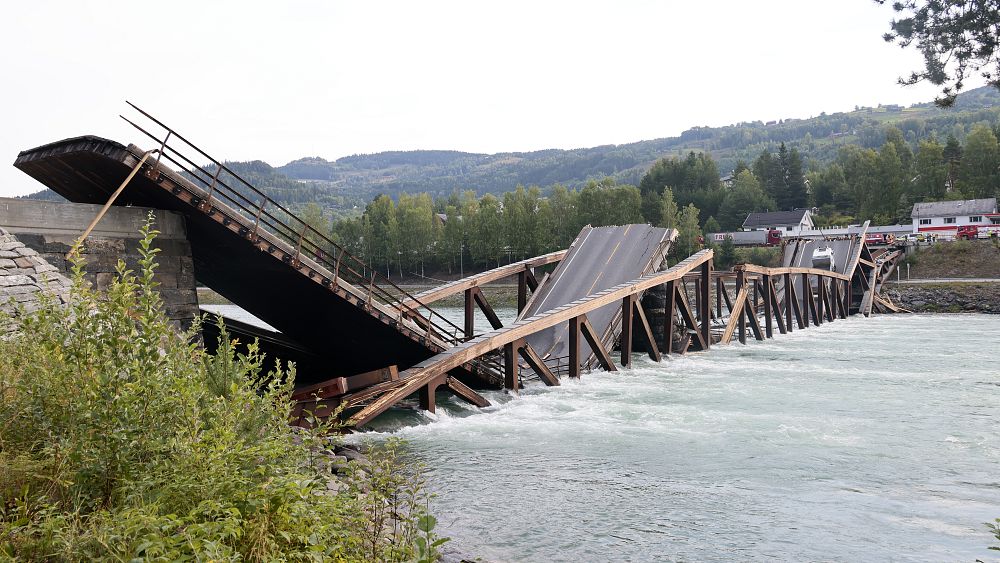
 Completely destroyed': Wooden road bridge collapses in Norway | Euronews

By Prince Gora

Note: This story is completely fictional. Any relations to real life events, places and or people are purely coincidental.

“Gogo, will it ever stop raining?” I posed the question to grandma as if I wasn’t interested about the rain at all. I wasn`t even looking at her. Instead, I was staring outside through the slightly open door of her kitchen hut.
 
It had been raining non-stop for more than 24 hours and the truth is that I was beginning to get worried.

I had initially dismissed the rains as just some light showers but after a full day of ‘non-stop light showers,’ my stance on that had since changed; the impact of the rain was now there for all to see, anyways. 
 
The roads were now flowing like a flooded Zambezi river and our front yard had literally turned into a replica of the famous Kariba dam.

“Yes, it will stop raining in a few hours now,” grandma replied in an equally disinterested but chilled voice while putting a log of wood into the fire. 
 
It was just grandma and I gathered around the fire in her kitchen hut. Grandpa had put on a raincoat and braved the rain so that the cattle could graze for a few hours.
 
Sekuru was, in fact, standing in for me. Herding the cattle was supposed to be my job, my father had specifically sent me to our rural home during the university vacation to do just that. He had also strategically sent the guy who minded the cattle for my grandparents on a three-months long leave just to be absolutely sure that I would be herding the cattle. 
 
It was his rather smart way of killing two, or should I say three, birds with one stone. The herder’s leave had been long overdue and according to my dad, I needed some rural experience so that I could appreciate our family roots better and get serious with school rather than wasting my time in college doing student activism which tainted the family's name and hampered my future employment prospects.
 
Dad strongly believed that the comrades I hanged around with were a bad influence on my behavior and it was pertinent for me to cut ties with them before I got myself suspended from school or arrested by the police - I did both barely three months later.

But Dad's perfect plan, like many of mine, was not perfect; it had loopholes. 
 
In all his scheming, he either forgot that there was electricity and a fairly stable internet connection at the local shopping center or never dared to think that I was willing to dedicate up to 5 hours of each and every day to walk a combined 10km to and from the shops so that I could stay connected to the struggle. He probably also forgot that Gogo and Sekuru so adoringly loved me that they wouldn`t possibly have let me do all the hard work of the village homestead alone, even with their frail bodies of old age.

The rain had however also just jeopardized my plan and I was getting restless. I so desperately wanted to go back to the shops and get an update of the happenings of the struggle
 
But if Gogo was right, I was just about to get back in business in a few hours.
 
I sat in silence with gogo for close to half an hour. The silence was only broke when Mr. Kandiyero, another villager who was a church mate of my grandparents, came by the house to check in on grandma.
 
After the usual pleasantries, he announced the big news; the river was flooded and the bridge had just collapsed.
 
The rain had been a crack on my ship but this, this was like 20 cracks on it and I had no plan on how to deal with the cracks. My ship was surely about to sink.

Just to make sure that my panic wasn`t premature though, I asked Gogo another question; categorically on behalf of a friend.
 
So Gogo, how will people go to the shops if there is no bridge?” I tried to musk my true feelings and made the question sound as innocent and general as it could possibly have been.

“Oh that? They don`t go. At least not until the level of the water in the river has significantly subsided.” Now it was time to really panic but grandma didn`t know that and so she went on to explain, without that much worry nor concern, that their makeshift bridge always collapsed every three or so years and people wouldn`t go to the shops until a new bridge was installed or until the level of water in the river had significantly decreased to safer levels which sometimes took up to three months.

She had to remind me that life in the village was so much different from that in the city when I inquired about how people would survive without access to fresh supplies from the shops or a grinding mill for that long.

“We have enough mealie meal to last us for the next three or so months and you brought all those groceries we need from the city to add to my already significant stock. And here in the village we have livestock, chickens, a garden and fields which provide us with literally everything else we need.”

“You know,” she briefly paused and then continued, “this is our life during the rainy season here. Even when the bridge is there, it is difficult to go to the shops after heavy rains because all the roads will be so muddy that one cannot possibly walk on them.”
 
With my little hope now completely extinguished, I decided to change the direction of the conversation and started to explain to my grandma that heavy rains like the ones the country had been experiencing over the last few years were a result of global warming and climate change. 
 
She didn`t quite understand much, or care to, about the burning of fossil fuels, carbon dioxide and other greenhouse gases causing global warming but she did agree with me that deforestation was a cause for concern and that the seasons seem to have changed for the worse over the last few decades.
 
“Yeah, I think I agree with you that the summers seem to be much longer and warmer now than when I was growing up while the rains are now much more erratic than when we were kids. You never know when to plant maize seeds these days, we always have to guess.” Grandma was talking slowly and seemed to be recalling scenes and memories from a long time in the past.
 
“Deforestation is what worries me the most muzukuru, when I was about your age, there were trees all over the this place surrounding the whole village. If you compare that to the trees that are left in now, it feels like we are now living in a desert.” Whenever grandma called you muzukuru (grandson/ granddaughter), you just knew that whatever she was saying was be very important.
 
“All that is contributing to climate change Gogo, and we need to take action.” I echoed her sentiments feeling rather proud that my granny wasn't a climate change denier.

“I don`t know about this climate thing you are talking about muzukuru but if the learned guys like your father are saying that we risk losing our home, then you, young people should do something to prevent possible catastrophe. The future belongs to you after all.”

One of the reasons why grandma is so fond of me is because she has always been proud of my father, her civil engineer son who lifted the family out of poverty. Whenever one talked about the ‘learned guys’, no matter the field, she always imagines her son.

The conversation has unexpectedly but pleasantry started getting deep and it illuminated even deeper thoughts in my mind. It suddenly dawned on me that the clinic as well as the primary and secondary schools were situated just next to the shopping center.

Always a believer of the greater good, l found it very hard to come to terms with how complicated life was for my grandparents and the other villagers during times like these when they didn`t have access to a health facility. It was even harder for me to think about the hundreds of students who obviously had to miss school during such times. 
 
Having grown up in the city, I had never quite understood why schools from my rural home had always recorded very low pass rates. My father and his siblings had been lucky because they had attended a mission school where my great-grandpa worked.

What it was, I don`t know but something from deep inside me was restless and telling me to do something about this situation so I asked grandma one more question.

“Gogo, I am wondering; if this is a perennial problem, why doesn`t the councilor and the MP (Member of Parliament) address it?”
 
The people’s representatives to the rural district council and the national parliament were loved and adored by the villagers mainly because of their timely donations of food and farming inputs which, for some unknown reason, were often done just before an election.

“Oh you think the councilor and MP haven`t tried to address the issue of the roads? They have. The DDF people have even brought their construction equipment here a couple of times, maybe twice or thrice but they only squander money and never do their job.”

My follow up question on the years that this had been done quickly confirmed my suspicions. Maybe the people`s representatives had really tried to address this issue but it was very curious for me to discover that the DDF (District Development Fund) people had come at periods corresponding to election campaigns.
 
I was deeply troubled by the stories I was hearing from grandma and knew that I should really, really do something.
 
But then I was just a young second year university student without the resources nor the connections of neither an MP nor a Councilor.

And that was when I remembered that the pen is mightier than the sword. I knew that I simply needed to tell this story to the world and the world would do the rest for me.

With electricity and stable mobile network connectivity now out of the equation, I had to improvise. The only other power source available was a small 50 watts solar panel meant for charging the battery of the radio. There was also a car charger which can be easily connected to a power source like a battery with a few cable extensions.
 
The challenge was that I couldn`t charge my phone for more than three hours without risking the reprimand of my grandpa who would most likely miss out on the 2000hrs main news bulletin on the radio. Staying informed and updated has been an important principle of my family for generations. It probably started with great-grandpa who had passed it to my grandfather and he had passed it on to his son who in turn had also passed it to me.
 
“It is important that you always know what is going on in this country and the world around you. It is very important for you to watch the news my son,” my dad used to say when I was younger and seemingly disinterested with the news. Now that I was a student activist, he didn`t have to worry about that anymore. I was now the one to bring all the breaking news home and, dare I say, even made the news myself at times.

My second challenge was network connectivity. It was almost never available and definitely never stable during the day. All the same I charged my phone for the 3 hours, set an alarm for 01:00am and switched the cellphone off to save power.

I still got the reprimand though because grandpa didn`t get to listen to the main news bulletin that night as the battery had ran out of power just after 6pm. He almost lost his temper and warned me to never use the battery for charging my phone again. 
 
What that meant is that I now had only one chance to shoot my shot, just one.

Fortunately, when I woke up at 01:00am the network was better and more stable, as I had hoped and so I set to work. I wrote a 500-word article on the situation of the road and the bridge in my rural home and sent it through to the guy who published our student stories in one of the smaller local papers. I also posted the article on Facebook and even did a mini-thread on twitter (now X).

I then ran out of power before I had had a chance to see if my efforts had born any fruits.

I expected a quick reaction and even result but days and then weeks passed. Even the very long month of January came to pass and still there was nothing. I also didn`t know what was happening out there because my dad`s plan had finally succeeded and I was completely off the grid now.

The primary and secondary school students also didn`t get to go to school that January and even February. But in March, the students started going to school again and to this day, they have never stopped going to school as long as it is open.

The villagers also started accessing the clinic and shopping center at will and during any season of the year because by the time I left to go back to university in mid February, some people from the city had come with their construction vehicles to mend the main road. Their vehicles had the same shape and the same yellowish color of those of DDF but they had a different name which I cannot quite remember anymore. These guys did the job. They put gravel on the main road and also constructed a proper modern bridge across Mavhura river.

* * *

When I arrived back in the city, I found my social media inboxes buzzing with messages. Some people had made enquires about the situation in the village a month back while others had accused me of being a liar who was just trying to taint the good name of politicians who were sacrificing for their people and issued me with threats of all kinds. Some had suggested to do a go fund me to pay for the bridge construction. The Councilor and the MP had also been summoned by the social media people (social media users) and they had professed their dedication to addressing the road challenge. They had offered to and were now even taking the lead in the road construction program.

By then, the momentum and controversy around the village story had also died down and I wondered if anyone still remembered the kid who had brought it all to light. I also never quite figured out who had paid for the construction of the road and the main bridge.
 
But, it doesn`t matter. The road and the bridge were constructed, kids started to go to school all year round and the primary and secondary school pass rates have been slowly going up over the past few years. For me, that`s all that matters!


About The Author
Prince Gora is blogger and fiction writer who writes for the love and power of writing. The goal is to tell the stories of my life: the stories I have lived, the stories I have seen others live and the stories I have read and heard; both fact and fiction. Prince holds a B.Tech Honours Degree in Chemical and Process Systems Engineering (HIT) and is currently studying towards a Master's Degree in Environmental Engineering at the University of Stavanger, Norway. His writing experience include reporting for University World News (Africa Edition) between 2020 and 2023 and being an assistant editor of YETT`s bi-monthly SAFRAP Newsletter between 2021 and 2023.

Saturday, May 13, 2023

Lawfare: the new normal in Zimbabwe as the Harare regime clamps down on dissenting voices.

By Prince Gora 

In a 1946 post-war confessional prose, the German Lutheran pastor Martin Niemöller (1892–1984) wrote a touching poem about the silence of German intellectuals and certain clergy—including, by his own admission, Niemöller himself—following the Nazi's rise to power and subsequent incremental purging of their chosen targets, group after group. The poem deals with themes of persecution, guilt, repentance, and personal responsibility. It reads as follows;

First they came for the Communists,
And I did not speak out,
Because I was not a Communist.

Then they came for the Socialists,
And I did not speak out,
Because I was not a Socialist.

Then they came for the trade unionists,
And I did not speak out,
Because I was not a trade unionist.

Then they came for the Jews 
And I did not speak out,
Because I was not a Jew.

Then they came for me,
And there was no one left.
To speak out for me!

Convict, Convict, Convict... is the new chorus in town.

1946 is a very long time ago and evils of the Nazi regime seem very divorced from any of the modern day leaders and rulers. Thus, at face value, Martin Niemöller's poem seem to have no practical applications to countries like, er, Zimbabwe. 

But let's take a closer look.

Let's begin by testing your memory and how closely you have been following the news over the past year or so.

Tsitsi Dangarembga, Julie Barnes, Makomborero Haruzivishe, Jacob Ngarivhume, Fadzayi Mahere, Job Sikhala, to name but just a few.

Anything in common amongst these people? Yes. They are Zimbabweans. 

Anything else? Again, yes. They are Zimbabweans who believe in a better future for the country.

Most importantly though is the fact that all the aforementioned citizens of my beloved country are people who have been convicted by the courts in the past few months. 

Criminals right? Well, let's not rush there - just yet. Let's take a closer look at the crimes they have been convicted for. 

Tsitsi and Julie? Holding placards demanding human rights. 

Mako? Blowing a whistle in a restaurant.

Ngarivhume? Calling for a peaceful demonstration. 

Fadzayi? Non existent law that was declared so by the High Court of Zimbabwe. 

Job Sikhala? Demanding justice for slain opposition activist, Moreblessing Ali.

For comparison, let us examine the case of Henrietta Rushwaya who was caught with 5kgs of gold in a hand bag at Harare International Airport some 2 years ago. Nothing has been heard of the case ever since. Or should we take a look at Obadiah Moyo's case of emblazoning Covid 19 funds or Prisca Mupfumira's scandal at NASA or Justice Mayor Wadyajena's COTTCO fiasco. All theses cases have a grand total of zero convictions.

Conviction is the jaganault, the chorus of the song. Verses of the song include unwarranted arrests, pre-trial detention, intimidation, abductions and censorship of everyone including creatives like the popular Winky D.

Lawfare.

Writing in his weekly bulletin, the Big Saturday Read, in August 2020, the late Dr. Alex Magaisa (MHSRIP) explained that, "There is a war that takes place without guns and ammunition, a war in which the law is the  primary weapon. This kind of war is referred to as lawfare."

Dr. Magaisa further explained that dictatorships rely on a combination of guns and the law but mostly the law because guns are too visible and too gory. They produce blood on the streets and create evidence of tortured bodies. The sight of thousands of gun-wielding soldiers and riot police on streets also gives away evidence of a severe crackdown and heavy-handedness.

So, alternatively, Dr. Magaisa explained, they engage in lawfare against dissenting voices instead. Dictatorships arrest and detain dissenters based on spurious charges and are kept in jail for a few days, sometimes weeks before they are released on bail.

A case of Job Sikhala.

What Dr. Magaisa wrote about, a kind of lawfare where dissenters are released from jail after being given bail in a few weeks is, perhaps, lawfare of the 'old'. 

In the 'new' lawfare, dissenters are kept in prison without bail for a year and then sentenced to a finable six months in prison. If this sounds like fiction, then you are not paying attention because this is exactly what happened to Zengeza West Legislator, Job Sikhala.

Something similar also happened to Makomborero Haruzivishe in 2021 in a case where Mako has since been proven to be innocent of the charges for which he spent 10 months in prison for.

It is important to point out that many years ago, in colonial Zimbabwe, similar scenarios were also recorded. The case of Mudzimbamuto, a freedom fighter who spent years in detention based on emergency powers is a good reference point.

Shrinking civic space and the silencing of society.

Empirical evidence clearly show that human rights defenders, opposition activists, civil society players and the likes are being targeted.

If you don't believe my theory, you may need to also take a look at proposed laws or laws that have been enacted in Zimbabwe in recent times. The PVO Bill, MOPA, the Cyber Security and Data Protection Act, the Patriotic Bill and etcetera will tell you everything you need to know about the intentions of the Harare regime. 

Conclusion 

As free human beings,  we have an option to either follow in Martin Niemöller's footsteps of doing nothing and regretting later - or not. But we also have an option to take a cue from his lessons and act now! It is however important for us to realize that if we keep quite now, they may be no one left to speak for us!

Wednesday, May 10, 2023

Coming Soon: Social Commentary

For the next several months, I  will be publishing a fictional short story on my blog every Sunday.

How it all started

I was attending my first ever writers` retreat in July last year when I declared, on the night of arrival, that a third generation descendent of mine would write on the golden anniversary of the retreat on 13 July 1972 that, “When they gathered for the writers` retreat on that Wednesday evening, I wonder if they knew that what they were about to do would change the course of history and inspire generations.”

The truth is that I didn't even have a solid reason for saying what I said that night. I  probably only did because I was asked to say something along those lines.

Little did I know that the retreat would unlock a side of me that had been locked for years; fictional writing.

I not only wrote a short story during the retreat but went on to write a couple of more short stories with the intention of publishing a short stories collection. 

I even contacted a publisher but owing to a number of issues; things like work, the power crisis, social media and outright laziness, I have failed to do so in almost a year.

Just this week though, to my pleasant surprise, I found myself writing a 1000 words long article with Blogger on my mobile phone. I had somehow forgot that I write better there than I do on WPS or even, in a way, on my PC.

That gave me ideas. What if I start publishing my short stories once every week, on a Sunday, until every short story has been completed?

In a flash, that is exactly what I have decided to do. Every Sunday, right here, I will post a short story as part of the Social Commentary Series. The longer ones can run for 2-3 weeks or more if need be.

When all is done, I will then compile everything and formally publish. 

Posts for the next five weeks, from Sunday, May 14th have already been uploaded and scheduled so stay tuned.

What is the Social Commentary all about?

Social Commentary is a compilation of mostly fictional short stories. I say mostly fictional because the stories in there borrow heavily from what I know, what I have heard and my surroundings which some people may relate to.

This may and will most likely touch some nerves and upset a few people but I am not really worried about that.

One of my writing inspirations, the writer Dambudzo Marechera (MHSRIP) often said that he wasn`t inspired by any writer but by the surroundings in which he grew up in. That is me a lot of times and especially in this short stories series. 

Social Commentary had another inspiration though besides my surroundings, a certain writer who wrote a short story she gave the title of Olikoye. I believe that her name is Chimamanda Ngozi Adichie.

Olikoye was part of the retreat assignments but I hadn`t even read it when I made my declaration. When I did, later that evening, a beast in me was awakened. I was deeply struck by how Chimamanda told a very interesting story while putting across some powerful lessons and brave ideas and when we had to do a writing assignment the following afternoon, her style of telling a story was all that I could think of and so, Mavhura Bridge, was born and so was Social Commentary.

I didn`t quite follow the same style in the rest of the stories though. I couldn`t possibly have done so because, well I first wrote one of them back in 2015 but had never had the courage to finish nor publish it. I still saw it fit to include it here because I realized that it is social commentary all the same.

More importantly to state though is the fact that I didn`t start writing any of the stories that I am going to publish in the series with the end in mind. Each story came out the way it wanted to and not the way I wanted it to. I merely allowed my thoughts and my pen to be swayed and mesmerized by my chosen characters.

To those of you who will enjoy reading the series, just one story told from different angles and by different characters, please do but to those of you who will take offense and be upset, tough luck but I am not sorry.

Social Commentary is simply me telling the stories of my life: the stories I have lived, the stories I have seen others live and the stories I have read and heard; both fact and fiction.

From the earliest days of childhood and my formative years as a writer, I have always wanted to tell these stories to the whole world and I am so relieved that I am finally going to do it!

Monday, May 8, 2023

Creating a Caring Campus Culture

By Prince Gora

Campus culture is the combination of language, behavior, values, and philosophy or outlook that are part of a college education. It's the "rules," usually unspoken, that college students learn to fit into a college.

It is a powerful source of socialization. Students are socialized through their perception of the institution’s norms, including peer norms, and their habitual participation in routine practices and communal events. 

There has been a recent spike in cases of mental health and suicide among tertiary students in the country. What's interesting to note is that while some institutions have recorded several cases of suicide over the past few years, others have recorded none. Obviously, some institutions are bigger than others, but one can't help but wonder if some institutions are more caring about their student's mental health issues than others. Institutions need to start doing more to safeguard the mental health of students. Below are 7 ways on how this can be done;

1. Teach life skills

Providing life-skills education for incoming students is valuable in teaching healthy ways to cope with the stress of college life especially in the Zimbabwean higher education environment where students sometimes struggle with the basics like food. Among important life skills are managing friendships and relationships, problem-solving, decision-making, identifying and managing emotions, healthy living, and finding life purpose and identity.

2. Promote connectedness

Loneliness and isolation are risk factors for mental health problems and suicidal ideation. Supportive social relationships and feeling connected to the campus community, family, and friends can help lower risk. A good example to follow could be the MindHandHeart initiative used to promote student connections at the Massachusetts Institute of Technology (MIT) in the United States. Every semester, the institute hosts Random Acts of Kindness Week (RAK), a weeklong series of events aimed at helping people connect through small acts of kindness. To encourage acts of kindness, MIT libraries provide stationery, postage, and paper so students can write kind notes to other students.

3. Train key leaders

It is crucial to identify students at risk for mental health problems and suicidal behavior and to promote emotional health awareness among select staff such as residence hall staff, academic advisors, faculty, and student leaders. These key people need to recognize and refer students in distress.

4. Encourage students to get help

Students who need help may be reluctant or unsure of how to seek it out. Obstacles to seeking help include lack of awareness of mental health services, skepticism about the effectiveness of treatment, prejudices associated with mental illness, and uncertainty about costs or insurance coverage. Institutions should consider implementing activities or programs on campus designed to increase the likelihood that a student in need will seek help.

5. Provide mental health and substance abuse services

It is essential for universities and colleges to offer accessible, consistent, and high-quality mental health services to students. Programs should be comprehensive and include strong and flexible services, adequate staffing and staff diversity, flexibility in treatment approaches, and clinic hours that reflect student schedules. Institutions' wellness centers must facilitate communication between health and counseling services. The blending of these services will enable institutions to provide comprehensive, holistic care to their students.

6. Follow crisis management procedures

Campuses should have a well-publicized, 24/7 crisis phone line either through campus resources or local/national services. Additionally, there should be a process in place to share information between local hospitals and school health and counseling services. One way to do this is to create a Crisis Text Line (CTL) to provide students with immediate mental health support and to increase help-seeking behavior. Toolkits and web pages must also be developed, shared, and adopted. The toolkits and web pages can provide resources for campus community members to spread awareness and information about CTL. In addition, all student ID cards must include CTL information so that the resources are readily available for students who may be in crisis.

7. Use telehealth services

Virtual mental health services can make a significant impact on college campuses. One such example is TimelyMD which provides immediate emotional support for students dealing with stress. It also has 24/7 care that expands after-hours support, eliminates wait time, and provides support for critical situations.

In conclusion, encouraging students to access mental health services positively reinforces that the student’s ability to participate in the full college experience is valued. Support for emotional well-being must be considered a campus-wide responsibility and prioritized similarly to physical health. Senior leadership must also acknowledge the importance of student mental health and well-being and nurture a shared value across the campus community. 

How college leaders create a caring campus culture will play a critical role in campus success. Creating a caring campus culture is attractive to prospective students and can nurture deeper learning.

Saturday, April 29, 2023

Semester Marriages: Why we should be concerned.

By Prince Gora 

Life as a university student in Zimbabwe is not easy. Tuition fees are barely payable and things like accommodation and food – which are basic human needs – end up seeming like luxuries.

To survive, many university students have had to devise various cost cutting methods. These include sharing living quarters and expenses with friends, classmates and even just schoolmates. A sizeable number of students also cut costs by sharing living quarters and expenses with their partners.

Elsewhere in the world, say for example, in the Western World, this is not a big deal. In Zimbabwe though, it is; which is probably why most parents are not aware of these so-called “semester marriages.”

“Semester marriages” are entered into by students who cohabit together during semester periods.

The Oxford Advanced English Dictionary defines cohabitation as the act of living together and having sexual relationship (without being married).

The individuals involved in “semester marriages” are usually called campus couples. The female in such situation performs wifely duty while the male take the role of the husband/breadwinner.
Causes of semester marriages are plenty and range from a high cost of living to accommodation which continues to be scarce in the country forcing many students to live outside campus and often in overpopulated environments. A desire for sexual gratification, the thrills of intimacy away from parental restriction, privacy or couples thinking of scaling up on their commitment levels are also common causes. For male students, having a student “wife” makes one lead a comfortable life as their partners prepare meals and do the laundry work.

Does semester marriages save students hundreds of dollars in costs every month? Hell yeah! Does it have negative consequences that should get us worried as well? Of course.

First, there are risks of unwanted pregnancies. Since the students involved are usually not prepared to become parents, they may make attempts to abort such pregnancies. Such abortions (which the individuals will usually want to be discreet about) may eventually put the female partner at risk of death or uterine damage. In cases where the couple decide to keep the pregnancy, the ability of the female student involved to study may be negatively affected by the arrival of the “unwanted babies.”

The wife duties performed by the lady in the relationship may also take a toll on her ability to take part in school work. At the end of the day, she may end up dropping out of school
Another consequence of cohabitation is that it may make the male partner to engage in social vices in order to keep the "marriage" afloat. This is because, the allowance provided by his parents may not be enough to take care of him and his campus wife. Some male students may end up engaging in crime or joining cult groups.

In 2019, a Masvingo Polytechnic was jailed an effective five years after he stole a car and tried to sell it to raise money for the upkeep of his demanding lover, who was also studying at the same institution.

Appearing before Masvingo regional Magistrate Mrs Dambudzo Malunga facing theft charges, Darlington Sagia (then aged just 21), Saga was convicted after pleading guilty.

He said that his live-in girlfriend was always pestering him for money to pay rentals and other household needs, yet he was still a student without a reliable source of income.
Another consequence of semester marriages is that such relationships sooner or later becomes monotonous which sometimes lead to loss of their professed love. In such cases, one or both of the partners may begin to engage in sexual abuse, domestic or emotional violence. This will eventually lead to emotional trauma which may end up affecting the academic performance of one both of the partners.

Semester marriages are also believed to be a major cause in increasing the rate of sexual transmitted infections (STIs) like HIV as they are usually for a short period, and new semesters bring potential new opposite sex room-mates. There are also the so called no-strings attached unions.

A report on HIV/Aids in institutions of higher learning in Zimbabwe revealed that students in these “semester marriages” only use condoms for the first few times of sexual interaction and then abandon them later.
Depression, mental health issues, nude pictures, revenge porn and excessive use of oral contraceptives by female students should also get us concerned. There are several cases where students commit suicides after former live-in partners leak nude pictures.

Conclusion

Parents need to take greater care of their children. They must visit and find out where their children live, meet roommates, etc. Accommodation on campus should also be affordable to students so that they are not vulnerable to various kinds of exploitation, including co-habitation.

When Everything Goes Smooth… Until It Doesn’t!

  By Prince Gora  Say you are about to wrap up a two-year master’s program on a scholarship and have got two job offers lined up.  After car...